
how many times to do istikhara
When you’re facing a difficult decision in life, seeking divine guidance through prayer can bring peace and clarity. One such prayer in Islam is the Istikhara prayer. It’s a special supplication that asks Allah for guidance when making decisions. The practice of Istikhara is deeply rooted in Islamic tradition, emphasizing the importance of turning to Allah in times of uncertainty. But how many times should you perform Istikhara? Let’s explore the Istikhara prayer guide, its benefits, steps, and how often it should be performed.

📚 Explore Our Latest Islamic Courses 📚






Istikhara comes from the Arabic word “khayr” which means “goodness.” This prayer is a way for Muslims to seek what is best for them from Allah. It is typically recited when faced with major decisions, such as choosing a spouse, making career moves, or other significant life choices. The essence of Istikhara lies in its ability to provide spiritual comfort and insight, reminding believers that they are not alone in their decision-making process.
The Meaning and Significance
The Istikhara prayer is a means of asking Allah for guidance and wisdom. It reflects a believer’s trust in Allah’s wisdom and their reliance on Him for making the best decisions. By performing this prayer, you are essentially asking Allah to guide you to the path that is best for you, even if it is not the one you initially desire. This supplication serves as a reminder of the limitations of human understanding and the boundless knowledge of Allah. The significance of Istikhara lies in its power to align a believer’s intentions with divine will, fostering a deeper connection with Allah.
📚 Explore Our Latest Islamic Courses 📚
How to Perform Istikhara Prayer
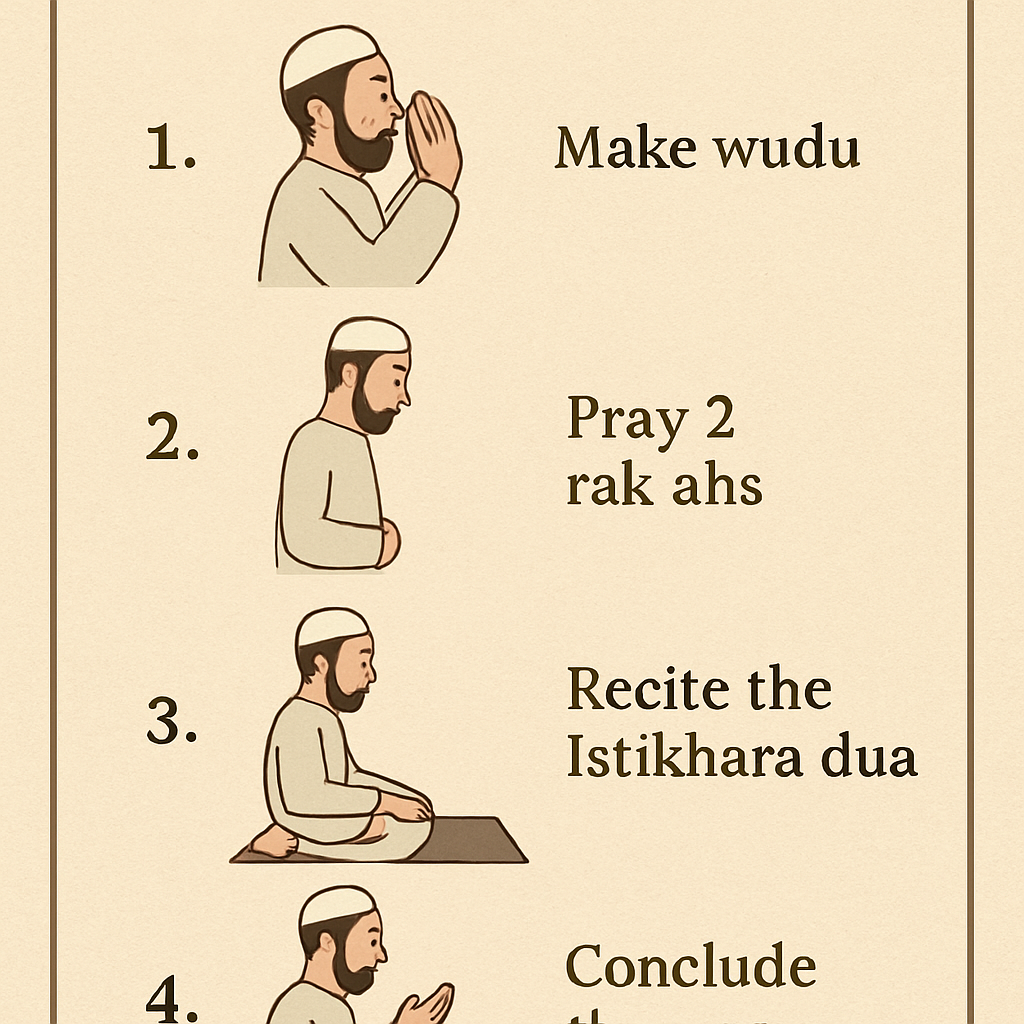
Performing Istikhara involves a specific process. Here is a simple guide to the Istikhara prayer steps:
📚 Explore Our Latest Islamic Courses 📚
- Perform Wudu (Ablution): As with other prayers, you should be in a state of purity. This physical cleansing symbolizes spiritual readiness and sincerity in seeking Allah’s guidance.
- Pray Two Rak’ahs of Optional Prayer: After making your intention for Istikhara, pray two non-obligatory rak’ahs. These acts of worship are crucial as they set the tone for the supplication, reflecting a humble approach to seeking divine guidance.
- Recite the Istikhara Dua (Supplication): After completing the two rak’ahs, recite the Istikhara dua, which asks Allah for guidance. This dua is a powerful expression of your dependency on Allah’s infinite wisdom and mercy.
- Make Your Decision: After the prayer, proceed with your decision. Trust that Allah will guide you to what is best. This final step emphasizes the importance of trust and surrender to Allah’s will, knowing that He knows what is best for His servants.
The Istikhara Prayer Dua
The dua for Istikhara is a heartfelt supplication in which you express your need for Allah’s guidance. The dua is available in various translations but is best recited in Arabic for authenticity. It includes asking Allah to guide you to the best decision and keep you away from harm. This supplication is not merely a request but an act of devotion that aligns the heart with divine wisdom. By reciting the dua, you acknowledge your limitations and place your trust in Allah’s perfect plan, which is a profound act of faith.
Benefits of Istikhara Prayer
Performing Istikhara brings numerous benefits to the believer. Here are some key Istikhara prayer benefits:
📚 Explore Our Latest Islamic Courses 📚
- Peace of Mind: Knowing that you have sought divine guidance can bring a sense of peace and satisfaction. This tranquility stems from the assurance that Allah is aware of your situation and is guiding you towards the best outcome.
- Trust in Divine Wisdom: It reinforces your faith and reliance on Allah’s wisdom and decision-making. Such trust empowers you to face life’s uncertainties with confidence and resilience.
- Clarity in Decision-Making: By seeking Allah’s help, you may find clarity and resolution in your choices. This clarity often manifests as a newfound perspective or insight into the situation at hand.
- Divine Guidance: You are asking for Allah’s intervention in steering you towards what is beneficial and keeping you away from harm. This divine intervention is a source of comfort, knowing that you are not navigating life’s challenges alone.
How Many Times Should You Do Istikhara?
The question of how many times to do Istikhara is common. There is no set number of times you must perform Istikhara. You may do it as many times as you feel necessary. However, scholars often advise doing it up to seven times, especially if you do not feel clear about the decision after the initial prayer. This recommendation underscores the importance of persistence in prayer and the understanding that divine guidance may take time to manifest.
Repeating Istikhara
- Daily Repetition: If you are uncertain, you may perform Istikhara daily until you feel a sense of clarity or peace regarding your decision. This regular practice reinforces your connection with Allah and your reliance on His guidance.
- Observing Signs: After performing Istikhara, pay attention to your feelings and the circumstances around you. Sometimes a decision becomes clear through subtle signs. These signs may be external events or internal shifts in your emotions and thoughts.
- Patience is Key: It is essential to be patient and trust that clarity will come in due time. Patience in awaiting Allah’s guidance is itself an act of worship, reflecting your unwavering trust in His wisdom.
Common Misconceptions About Istikhara
There are several misconceptions about Istikhara that need clarification:
📚 Explore Our Latest Islamic Courses 📚
- Istikhara as a Dream Indicator: While dreams can sometimes offer insight, Istikhara is not solely about receiving dreams. It is more about seeking peace and guidance. Dreams should not be the sole basis for decision-making, as the true essence of Istikhara lies in the tranquility and clarity it brings.
- Immediate Answers: Answers may not always come immediately. Sometimes they manifest in how events unfold or through an inner feeling of peace. This understanding encourages believers to remain patient and open-minded, trusting in Allah’s timing.
Conclusion
Istikhara is a beautiful practice that allows Muslims to seek Allah’s guidance in making important life decisions. It is a means to communicate with the divine, asking for wisdom and clarity. How many times you should do Istikhara depends on your personal needs and the clarity you seek. Whether you decide to perform it once or multiple times, it is essential to maintain trust and patience in Allah’s plan. Remember, Istikhara is about seeking what is truly best for you, and through it, you put your faith in Allah’s ultimate wisdom. By embracing this practice, you affirm your belief in Allah’s benevolence and your commitment to aligning your life with His divine will.